
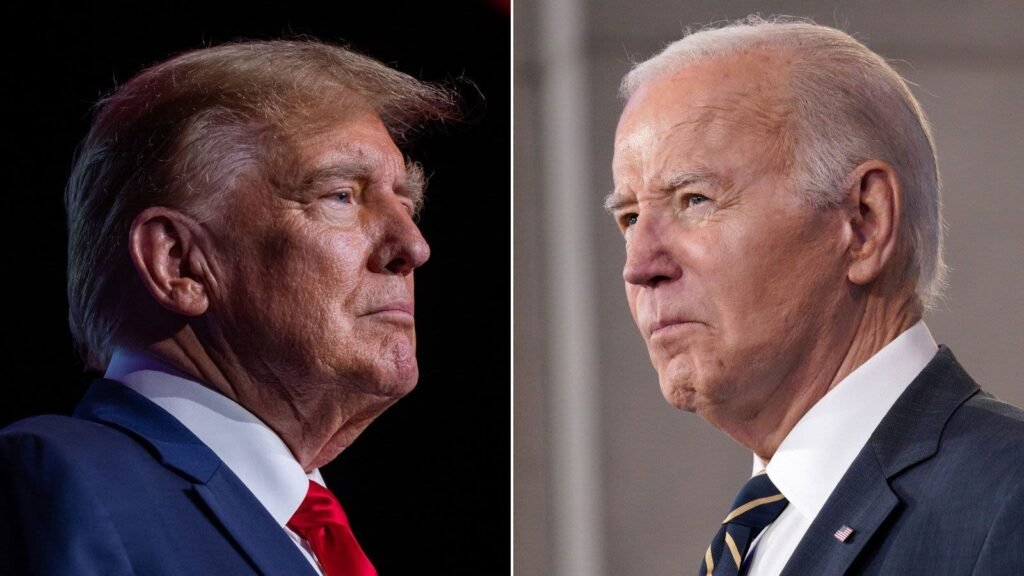
Trump’s vs. Biden’s Economic Record
2024 marks an election year. One of the key policy discussions is the economy. What’s unique about this particular race is that both of the favorites to win the republican and democratic nomination have spent 4 years in office. So, we have a baseline to see how each candidate will handle the economy.
Donald Trump inherited an economy that was bouncing back from the Great Recession in 2008. Unemployment was decreasing, the GDP was growing by around 2% – 3%, and the national debt declined significantly. When Trump came into office, he took a Reaganesque approach to economic policy. He instilled heavy tax cuts throughout his term. Not only did he reduce corporate taxes from 35% to 21%, he reduced taxes for all tax brackets. Moreover, former President Trump adopted deregulation measures, specifically in the environmental and finance sectors. In relation to trade, Trump imposed tariffs on China and on goods like steel and aluminum. Up until the pandemic, the Trump administration witnessed similar growth compared to Obama’s two terms. However, Trump’s economic policies brought on a whole host of different issues. The first point of contention is that his deregulation efforts and tax breaks benefitted the top 1% of earners significantly more than low-income and middle class Americans, thus strengthening the dichotomy between the rich and the poor. Another criticism is that Trump’s economic plan drastically increased the federal deficit. During his term, the national deficit increased by 6.7 trillion dollars. Lastly, a common concern with tariffs is that the consumer ultimately bears the cost. It also worsened economic ties between the US and China.
Due to Trump’s mishandling of the Covid pandemic, Biden received an economy that was in free fall. In order to avoid a larger recession, the President swiftly acted with stimulus payments of around 2 trillion dollars and invested heavily in infrastructure, creating more jobs. Unlike Trump, Biden invested heavily in energy and climate friendly policies providing tax-incentives and funding for this sector. Moreover, he reversed some of the tax breaks that Trump implemented, increasing taxes for earners in the top 1%. Although these efforts helped return the economy back to its pre-Covid days, heavy government spending and stimulus payments have resulted in inflation.
Ultimately whose economic record sounds more appealing is up to one’s own personal beliefs. If you are for short-term economic growth, Trump’s tax cuts are the way to go. However, if long-term economic equality is your priority, Biden’s tax increases on the rich and investments does just that. I’ll find it interesting what both campaigns pledge to do economically once in office and how similar or different it is from their records. But hey, it’s just a thought! 2024 marks an election year. One of the key policy discussions is the economy. What’s unique about this particular race is that both of the favorites to win the republican and democratic nomination have spent 4 years in office. So, we have a baseline to see how each candidate will handle the economy.
Donald Trump inherited an economy that was bouncing back from the Great Recession in 2008. Unemployment was decreasing, the GDP was growing by around 2% – 3%, and the national debt declined significantly. When Trump came into office, he took a Reaganesque approach to economic policy. He instilled heavy tax cuts throughout his term. Not only did he reduce corporate taxes from 35% to 21%, he reduced taxes for all tax brackets. Moreover, former President Trump adopted deregulation measures, specifically in the environmental and finance sectors. In relation to trade, Trump imposed tariffs on China and on goods like steel and aluminum. Up until the pandemic, the Trump administration witnessed similar growth compared to Obama’s two terms. However, Trump’s economic policies brought on a whole host of different issues. The first point of contention is that his deregulation efforts and tax breaks benefitted the top 1% of earners significantly more than low-income and middle class Americans, thus strengthening the dichotomy between the rich and the poor. Another criticism is that Trump’s economic plan drastically increased the federal deficit. During his term, the national deficit increased by 6.7 trillion dollars. Lastly, a common concern with tariffs is that the consumer ultimately bears the cost. It also worsened economic ties between the US and China.
Due to Trump’s mishandling of the Covid pandemic, Biden received an economy that was in free fall. In order to avoid a larger recession, the President swiftly acted with stimulus payments of around 2 trillion dollars and invested heavily in infrastructure, creating more jobs. Unlike Trump, Biden invested heavily in energy and climate friendly policies providing tax-incentives and funding for this sector. Moreover, he reversed some of the tax breaks that Trump implemented, increasing taxes for earners in the top 1%. Although these efforts helped return the economy back to its pre-Covid days, heavy government spending and stimulus payments have resulted in inflation.
Ultimately whose economic record sounds more appealing is up to one’s own personal beliefs. If you are for short-term economic growth, Trump’s tax cuts are the way to go. However, if long-term economic equality is your priority, Biden’s tax increases on the rich and investments does just that. I’ll find it interesting what both campaigns pledge to do economically once in office and how similar or different it is from their records. But hey, it’s just a thought!