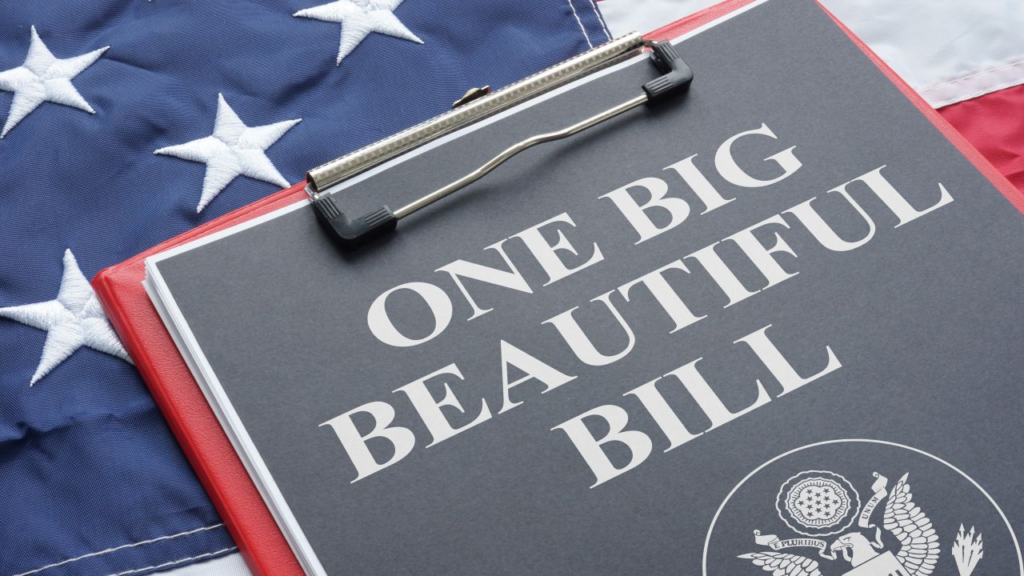
This week, a sweeping piece of legislation, tagged as the “One Big Beautiful Bill” (OBBB) by President Trump, was contentiously signed into law. Hailed by Republicans as a resounding victory for American taxpayers, critics have characterized the bill as an insidious disguise of austerity and inequality. Upon further inspection, beneath the foray of tax cuts and deregulation, America’s quintessential safety nets are set to be gutted: safety nets that millions of Americans need to survive. Programs like Medicaid and SNAP that provide key benefits to the working class, primarily composed of people of color, have been sacrificed to finance aggregate tax cuts for the wealthy. It is these deceptive practices that Voices Unchained seeks to expose, as inequity will continue to linger unless we choose to speak up.
The cuts to social welfare programs like SNAP and Medicaid have received the most attention from the media. One particular provision is the blocking of Medicaid grants, allowing states to reduce coverage and benefits for recipients. Prior to this revision, the federal Medicaid program appropriated funding to different states based on their particular needs. However, this change caps the amount of support states can receive from the federal government. Additionally, it limits federal oversight on state-run Medicaid programs, giving states complete authority over eligibility, services, and other premiums. Medicaid covers over 75 million low-income Americans, the majority of which come from marginalized populations. Thus, these new implementations are disproportionately impacting people of color, increasing racial disparities. In addition to cuts to Medicaid, the Supplemental Nutrition Assistance Program (SNAP) has also been severely impacted. The OBBB imposes stricter working requirements on recipients in order to dispel dependency on the program. However, this bureaucratic nightmare only seeks to limit people’s accessibility to the program. For instance, when Arkansas implemented work requirements in 2018, over 18,000 people lost coverage in spite of being eligible. With over 20 million households relying on SNAP to put food on the table, most of which are people of color, this restriction could threaten the health and futures of many.
Healthcare isn’t the only sector that has been harmed by this deleterious federal bill; housing is also at risk. One of the prominent alterations comes in zoning. Previously, developers would receive tax incentives for building “Opportunity Zones”, low-income housing, but would also be required to engage in community reinvestment. However, this bill changes that requirement, essentially providing developers with a massive tax break with no strings attached. “Opportunity Zones”, once a beacon of revitalization, now has developed into a gentrification trope. Furthermore, the OBBB prohibits states and municipalities from enforcing rent control, eviction moratoriums, or just-cause eviction laws for federally funded properties. All three of these renter-friendly provisions help ensure that tenants are treated justly and are protected from unfair displacement. With people of color disproportionately representing the renting population, these changes only serve to proliferate housing insecurity for the most marginalized peoples.
Why would the federal government make such sustainable cuts and changes? Well, as it tends to go, it’s to finance the new array of tax cuts for the top 1%. The “One Big Beautiful Bill” may masquerade as a step towards progress, but beneath the pleasantries lies a bill that proffers a tale as old as time – the rich stealing from the poor. Voices Unchained seeks to shine a light and dismantle deceptive pieces of legislation like this through advocacy. You can show which side you stand on by choosing to unchain your voice and speak the truth.